


A BURIED TREASURE
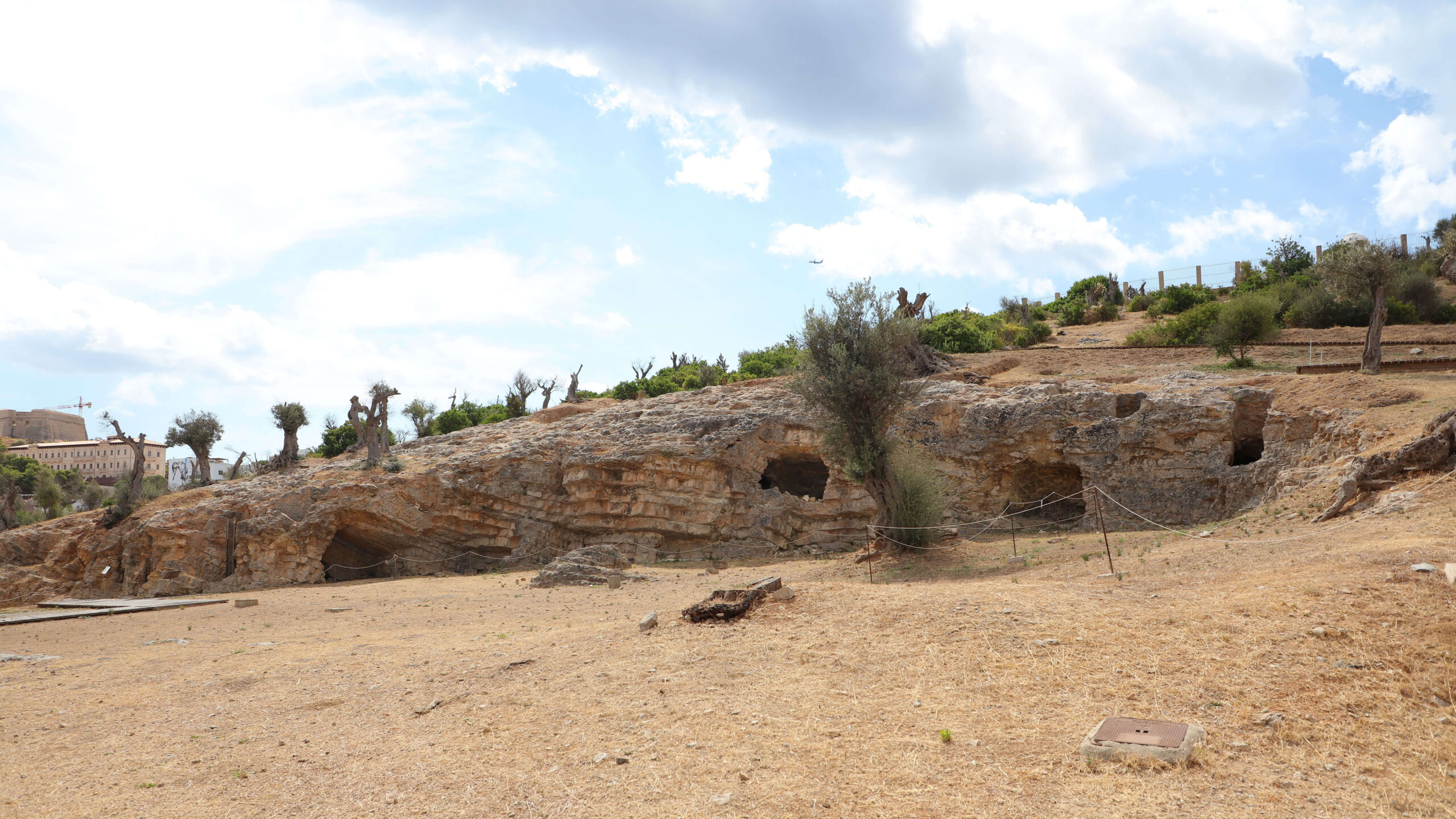
The Puig des Molins area is one of the most important archaeological sites in the western Mediterranean. Its history dates back to the Phoenician era, when colonists from the Levant founded the city of Iboshim in the 7th century B.C. From its earliest days, this site was chosen as a necropolis due to its strategic location—slightly elevated and close to the urban center—making it an ideal site for funerary purposes.
During the Punic period, under the influence of Carthage, Puig des Molins reached its peak of development. It is estimated that it once housed thousands of hypogea—tombs carved into the rock—where the city’s inhabitants were buried. These funerary structures reflect a complex society, with elaborate rituals and a clear social hierarchy, evident in the richness of the grave goods found.
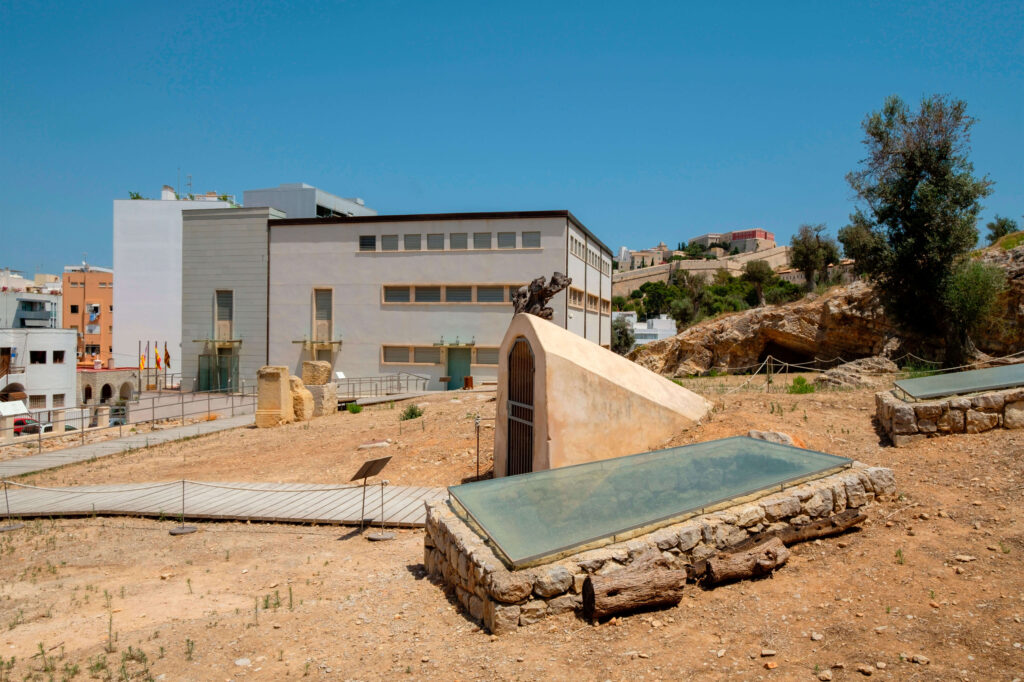
The site’s importance lies not only in its size but also in its exceptional state of preservation. Unlike other Phoenician-Punic necropolises, many of the tombs at Puig des Molins have remained relatively intact over the centuries. This has allowed archaeologists to reconstruct key aspects of daily life, religious beliefs, and funerary practices of these ancient cultures.
With the arrival of Roman rule following the Punic Wars, the area continued to be used for burial purposes, although with changes in rituals and spatial organization. Later, during the Islamic and medieval periods, the area was partially reused and transformed, adding new historical layers to its already complex stratigraphy.
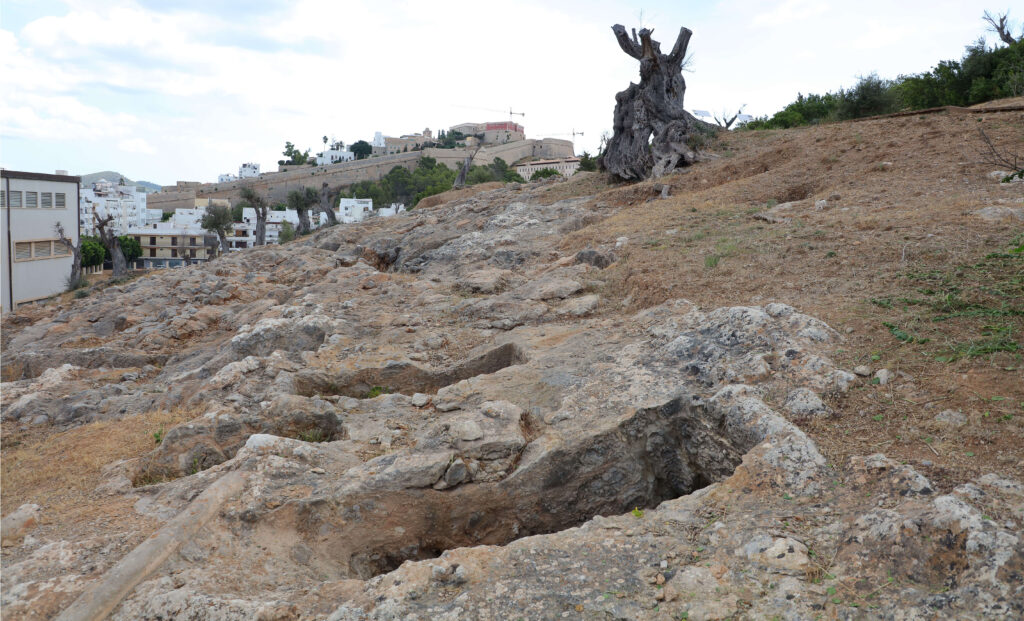
In modern times, Puig des Molins has been the site of numerous archaeological excavations, particularly since the 20th century. These excavations have unearthed a vast amount of artifacts, including votive figures, pottery, amulets, and human remains, many of which are now preserved at the Archaeological Museum of Ibiza and Formentera. This museum plays a vital role in the dissemination and study of the island’s historical heritage.
Today, Puig des Molins is recognized as part of the site designated a UNESCO World Heritage Site. Its historical and cultural value makes it a unique testament to the Phoenician-Punic presence in the Mediterranean, as well as a symbol of Ibiza’s rich multicultural heritage.
See all posts